


Which AWD system fits Canton, OH families best — i-VTM4 on the Honda Pilot or HTRAC on the Hyundai PALISADE?
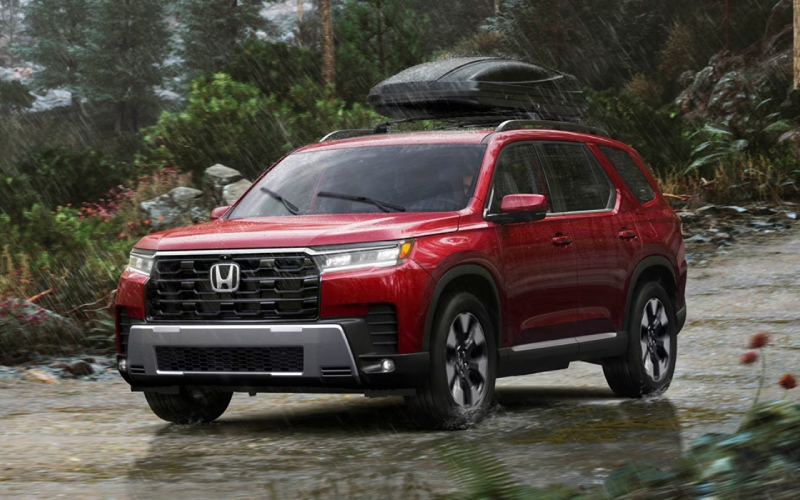
Parkway Honda – Which AWD system fits Canton, OH families best — i-VTM4 on the Honda Pilot or HTRAC on the Hyundai PALISADE?
When you compare two family-focused 3-row SUVs, the conversation naturally turns to all-wheel drive and confidence on mixed roads. Canton, OH drivers face everything from stop-and-go commutes and wet on-ramps to unpaved access roads leading to trailheads and ballfields. So which AWD system provides the most poised, predictable grip—the Pilot’s i-VTM4® or the Hyundai PALISADE’s available HTRAC? Let’s unpack the systems, the drive modes around them, and how each SUV behaves when the surface gets imperfect.
Quick context: what each system aims to do
Honda’s i-VTM4® is a torque-vectoring design. It can actively route power not just front-to-rear, but also side-to-side across the rear axle using dual clutch packs. That side-to-side control helps the vehicle rotate confidently through low-traction turns and minimizes wheelspin as you accelerate onto angled or uneven pavement. Hyundai’s HTRAC is a predictive, electronically controlled AWD with a front-to-rear emphasis and an available rear eLSD on certain trims. It’s designed to improve stability, traction, and control on slippery or loose surfaces and does an excellent job of keeping the SUV composed.
In practice, both systems are capable. Where you feel the difference is at the rear axle: the Pilot can actively apportion torque between the left and right rear wheels, which supports more decisive rotation in slick corners and on loose surfaces, while the PALISADE uses a combination of traction control, braking, and its drivetrain strategy to keep you planted.
Drive modes that match real Ohio roads
Beyond AWD, the available 7-Mode Drive System on the Pilot—Normal, ECON, Sport, Snow, Trail, Sand, and Tow—lets you tailor throttle, shift behavior, and traction logic to meet the moment. Trail and Sand modes are standouts when you’re navigating deeply rutted lots or sandy launch areas around lakes. PALISADE adds Terrain modes of its own to complement HTRAC. For everyday driving, both are smooth and natural; when conditions get specific, the Pilot’s broader set of modes can be the difference between gingerly coaxing your way forward and simply pulling away with calm assurance.
Hardware that helps beyond traction
Capability is also about what protects you and what you can see. The Pilot TrailSport brings steel skid plates for the engine and fuel tank, all-terrain tires, and recovery points—hardware with day-to-day payoff when you encounter washboard surfaces or hidden ruts. It also adds a Multiview camera system with TrailWatch™, which projects underbody and forward views to the 12.3-inch screen to help place your wheels accurately. PALISADE counters with an available Surround View Monitor, which is excellent for parking and low-speed maneuvering; on the trail, the Pilot’s TrailWatch™ views are uniquely helpful for reading obstacles.
On-road feel: steering, braking, and stability
i-VTM4® makes the Pilot feel settled when accelerating through a slippery turn, such as a rain-slicked neighborhood intersection or a crowned back road near town. Because the system can send additional torque to the outside rear wheel, the SUV “pushes” itself through the arc rather than allowing the front tires to do all the work. The result is less scrubbing at the front axle and a calmer steering wheel. The PALISADE, meanwhile, feels substantial and sure-footed, with confidence-inspiring stability that families appreciate on longer highway drives and cross-county trips.
- Aim of the system: i-VTM4® prioritizes active torque vectoring for precise rotation; HTRAC prioritizes stability and traction management across surfaces.
- Drive-mode coverage: Pilot offers up to seven modes including Trail and Sand; PALISADE offers Terrain modes tailored to common low-grip scenarios.
- Low-speed visibility: Pilot’s TrailWatch™ supports wheel placement off pavement; PALISADE’s Surround View Monitor shines for tight urban parking.
- Protective hardware: Pilot TrailSport equips steel skid plates and recovery points; PALISADE XRT PRO emphasizes styling with increased ground clearance and all-terrain tires.
Neither approach is wrong—both SUVs are impressively capable for family life—but the Pilot’s torque-vectoring advantage shows up most when surfaces are uneven or slippery, and when you need the rear axle to help “finish” a turn with composure.
Technology, towing, and cabin usability still matter
AWD is only part of the story. For busy households, living with the SUV should feel easy. Pilot’s Google built-in, wireless Apple CarPlay®/Android Auto™, and available Bose premium audio help keep routines simple and enjoyable. The stowable 2nd-row center seat is a clever solution for families that need both captain’s-chair comfort and true 8-passenger flexibility. PALISADE responds with available features such as a 12.3-inch panoramic display setup, Alexa Built-In, and elegant seating options, plus an integrated dash cam and thoughtful charging solutions.
Towing is a win for both—properly equipped trims on either model handle up to 5,000 pounds. With the Pilot’s Tow mode and the way i-VTM4® and the 10-speed automatic work together, pulling a small camper or watercraft feels controlled and predictable. PALISADE remains very stable and confident when loaded, which speaks to its road-trip readiness.
Where to test both systems near you
The best way to choose is to drive both SUVs back-to-back over the same loop, including a few right-hand turns from a stop on a damp or sandy patch, plus a hard merge onto a local highway. That quick test will highlight how each AWD strategy and drive-mode logic responds. You’ll also see which visibility tools—Pilot’s TrailWatch™ or PALISADE’s Surround View Monitor—fit the situations you encounter most.
Parkway Honda, serving Canton, Massillon, and Wooster, is ready to help you compare systems and features so you can make a confident choice for your family.
Frequently Asked Questions:
Does i-VTM4® help on dry pavement, or only in bad weather?
It helps on both. On dry pavement, the system’s ability to send more torque to the outside rear wheel supports precise cornering and reduces front-tire scrub. In low-grip conditions, it adds traction and stability when pulling away or turning on slick surfaces.
Will I notice the difference between i-VTM4® and HTRAC in everyday driving?
Many drivers feel the difference during low-speed turns, angled intersections, and uneven surfaces. The Pilot typically rotates more decisively thanks to torque vectoring, while the PALISADE often feels especially settled and calm at highway speeds.
Which model has more off-pavement tools I can actually use?
Pilot TrailSport leans into functional hardware—steel skid plates, recovery points, all-terrain tires, and TrailWatch™ camera views. PALISADE XRT PRO brings all-terrain tires, increased ground clearance, and an integrated tow hitch. If you value underbody protection and trail-oriented camera views, the Pilot gets the nod.
How important are drive modes if I just run errands and commute?
Drive modes tailor throttle response, shift mapping, and traction logic. Snow or Trail can be a big help even at city speeds, while Sport can sharpen response for confident merging. It’s about matching the vehicle to the moment without thinking too hard.
What about safety packages—are they comparable?
Both are robust. Honda Sensing® is standard on every Pilot and includes CMBS™, Road Departure Mitigation, ACC with Low-Speed Follow, LKAS, and Traffic Sign Recognition. PALISADE offers comparable tech with Hyundai SmartSense, plus available Highway Driving Assist 2 and Blind-Spot View Monitor. The difference comes down to calibration feel and which features you’ll use most often.
Ready to put each system to the test and see what suits your Canton, OH routes? A focused drive highlighting quick stops, damp turns, and a highway merge will make your decision simple—and likely confirm why the Pilot’s i-VTM4® reputation is so strong.
0 comment(s) so far on Which AWD system fits Canton, OH families best — i-VTM4 on the Honda Pilot or HTRAC on the Hyundai PALISADE?